Sunday, May 11, 2014

The Perfect Garden

I’ll admit that picking my favorite garden style was a surprisingly difficult task. On one hand, I love the grandeur of sprawling gardens, with their elaborate topiary and water features. A garden like Versailles is simply stunning, but I am not sure that is the best garden for me. I found throughout the semester that I really like a more personal garden that allows for an intimate connection with nature, which is practically impossible with huge, formal gardens.


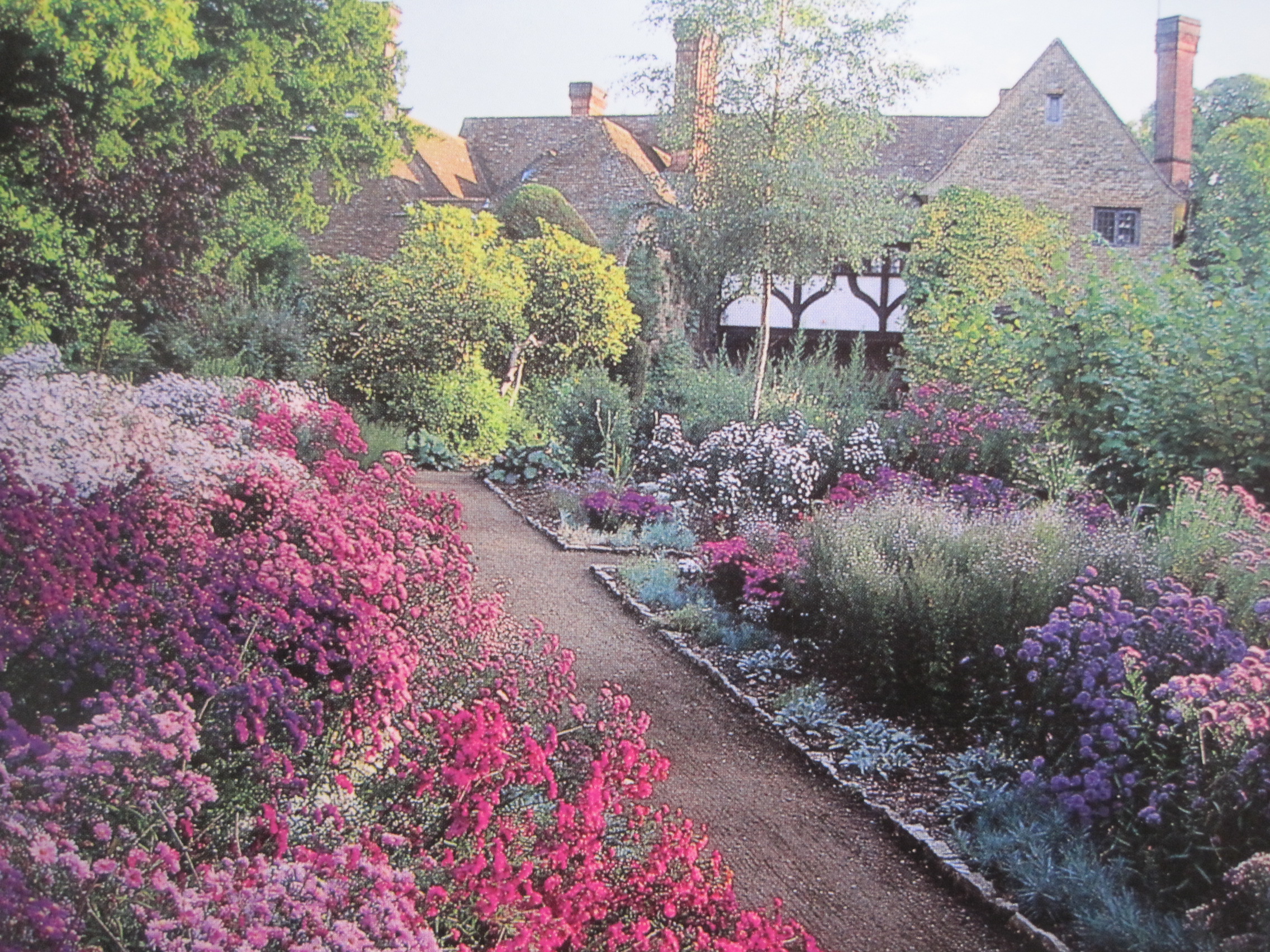
The Arts and Crafts garden (top) compared to a very
garden at Versailles. Note the very formal hedges and
flower placement at Versailles, in comparison for the very wild
appearance of the Arts and Crafts
To find this more personal connection, I would build a smaller garden that closely resembles those made during the Arts and Crafts period. These gardens, famously made by Jekyll and Lutyens, are literally bursting with flowers ranging from sunflowers to daffodils to irises, are simply beautiful. The simple, flowing design of the garden shuns the use of elaborate statues or fountains and instead creates a smaller, intimate space that bring people closer together to nature, and to each other. My ideal garden is a place to spend time with friends or enjoy a beautiful picnic, and this type of garden provides an elaborate and colorful backdrop. The garden appears relatively natural thanks to the use of wildflowers and other native plants, yet it is also filled with hardy plants that require relatively little maintenance. I find this particularly appealing because it allows for stress-free enjoyment, as there is no pressure to constantly weed or replant flowers. Instead, the curved lines and flowing paths of a Jekyll and Lutyens garden is completely relaxing, and the wide array of flowers can be simply stunning. I find this type of garden to be extremely aesthetically pleasing, and it can almost overwhelm the senses with the wide range of colors and scents.


I think I like this garden because it provides a way to connect the body with nature, while not being as sparse as the landscape gardens. Although I think nature is beautiful, I have always found flowers to be much prettier than perfectly manicured fields and lakes. I have always been taught to appreciate simple beauty, so a field of wildflowers is particularly appealing, and, to me, smaller spaces can be just as beautiful as larger, more majestic gardens. My mother has really emphasized this point to me, and we have a small but beautiful flower garden at home. We also used to visit several gardens that closely resemble that of Jekyll and Lutyens, and some of my first memories of gardens are of Arts and Crafts gardens. During the spring and summer months, these gardens turn into a sea of different colors, with each plant being more beautiful than the last. In a way, the mixture of colors, textures, and heights makes these gardens even more impressive than that of Versailles, as a huge palace lacks the quiet, simple beauty of the perfectly designed Arts and Crafts garden.  

Saturday, May 3, 2014

A Return to Nature- The Arts and Crafts garden


The arts and crafts garden was an intentional movement against the formality of the past. In the mid to late 19th century, greenhouses and palm houses began to flourish, and these huge, hulking structures began to dominate gardens across the country. Similarly large and garish bedding designs were also popular, although both flatly rejected by those involved with the arts and crafts movement. In place of formality, people like Jekyll and Lutyens sought a more natural garden that would display the simple beauty of nature, rather than the unnaturally manipulated garden of the past.

An example of an Arts and Crafts garden
An example of a Jekyll-Lutyens masterpiece.
The architecture of the house, largely
designed by Lutyens, reflected the local style
and used local materials. The gardens were
designed together, but planted primarily by
Jekyll.

Jekyll and Lutyens formed an extremely interesting partnership, one that began to blur the line between architect and garden designer. They found a kindred spirit in one another, and purposefully ignored the traditional competition between architect and gardener. In the case of Munstead Wood, Jekyll’s home, Jekyll provided the (surprisingly specific) inspirations and plans for the house, while Lutyens possessed the skills and ability to turn the plans into reality. The two collaborated closely, and the result is an extremely typical Arts and Crafts garden. Interestingly, Jekyll believed that Lutyens’ architecture, and the resulting garden, was very hard and rigid, so she began to use a flower border to soften the feel of the garden. Her goal was to create a garden that was homey, with a “parlor-like space” for rest and relaxation; she accomplished this by using a flower border, which was soft, colorful, and flowing.
The flowers in the flower border, and in the entire garden, followed a very specific color pattern that was influenced by Jekyll’s training as a classical painter. The gardens generally featured beds of flowers with only one color, which would melt seamlessly into an adjacent bed with flowers of a similar, but slightly more/less vibrant color. This continued until an entire spectrum of colors were used, and Jekyll typically followed a warm to cold to warm pattern, in which bright red and orange flowers slowly faded to cooler light blues and whites, and finally returned again to vibrant yellows and purples. Throughout these colorful beds, there was a simple focus on hardy plants that could survive the cruel British winter and require little to no maintenance. Exotic plants, such as the oranges famously seen at Versailles, were generally not used due to these weather considerations, so there was a greater focus on plants native to Britain and the surrounding countries. Wildflowers of all colors were universally used, as were sunflowers, daffodils, and irises. Roses, astors, and some shrubs were often seen throughout the gardens as well. It wasn’t unusual to have an orchard with native fruit trees, which frequently contained pergulas, arbors, or even a place to play tennis or bowling.
The gardens at Munstead Wood

Although these flowers were carefully planted, Jekyll used her extensive knowledge of flowers to ensure that the flowers had different heights, textures, and leaf colors, which made the garden seem more natural, and not meticulously planned. These gardens were supposed to seem wild, which was partially reflective of a growing trend, in which urban and suburban citizens sought to make a return to rural life. As industrialization proceeded at a rapid pace, popular sentiment began to shift, and there was an increasing desire to go “back to the land,” returning to the slower, simpler country life. Thus, these gardens served as a crucial way to connect owners to nature, as if the entire garden was nothing more than a field of wildflowers, swaying gently in the breeze.