It is remarkably obvious that
Versailles was built to impress. Even in today’s society where gluttony rules,
and where buildings seem to be getting bigger at an alarming rate, Versailles
Palace and its gardens are still amazingly impressive. This palace was built
for King Louis XIII, but was drastically expanded under the reign of Louis XIV.
The palace, at the king’s orders, became the center of power, and all members
of the nobility were required to live in the palace. All politically powerful
people were lived and worked at the palace, making the government more
efficient, but also allowing the king to carefully watch and control the
nobles.

Top: the Orangerie garden of Versailles; orange trees are extremely expensive and require much care and dedication, and were used as a sign of power at the Palace.
Bottom: An interior room at Versailles, showing the sheer grandeur of the palace
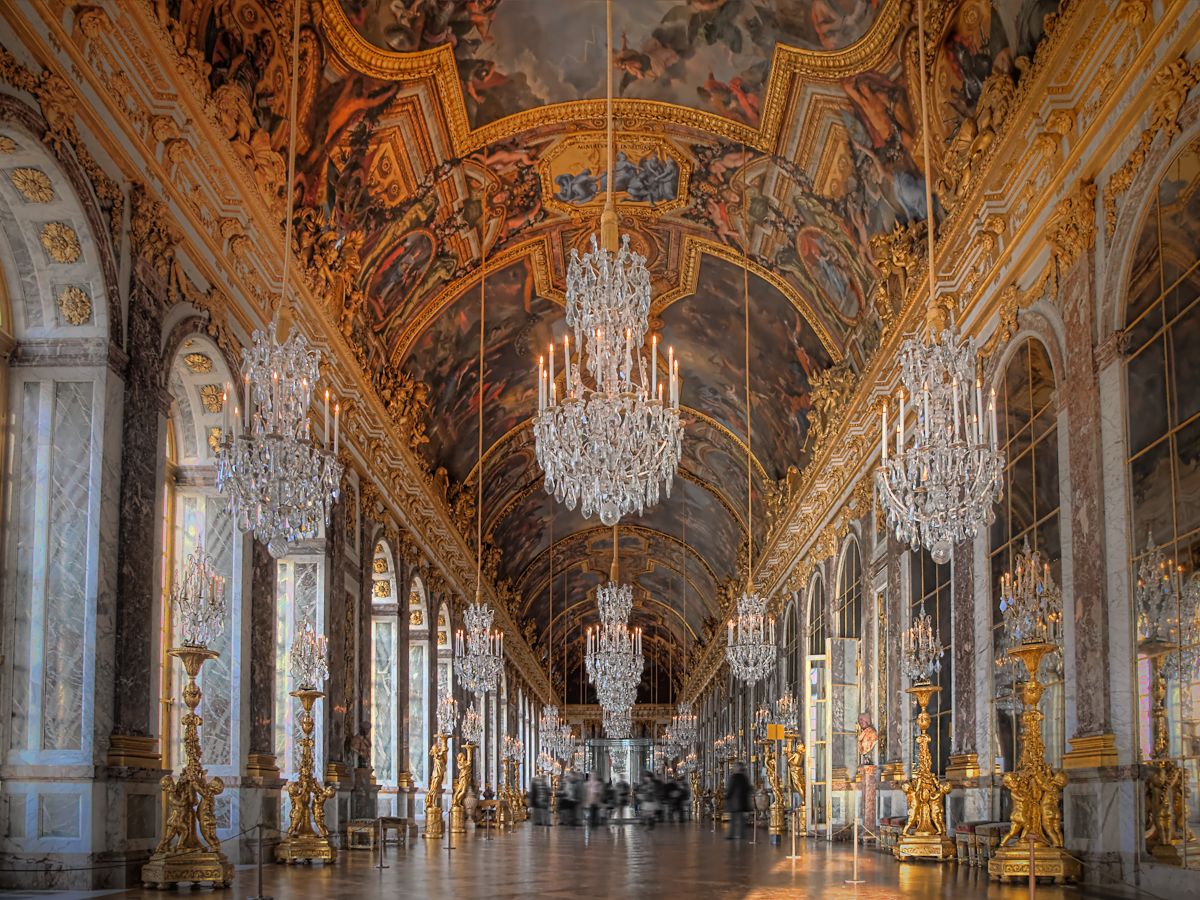
These nobles, however, were not
particularly excited to be forced to move to this countryside palace;
naturally, Louis softened the blow by providing them with beautiful
accommodations and an excess of entertainment options. Perhaps unsurprisingly,
entertainment was provided in the form of parties, which were usually held in
the gardens of the palace and often featured military elements. For example,
military games were enormously popular among the nobles, who often formed teams
and fought against each other. These competitions, which included jousting and
sword fighting, were designed to showcase the physical strength and mental
stamina of the nobleman, and the winners frequently gained favor with the king
himself. These mock military battles were an attempt to show France’s constant
obsession for control and power, as well as the history of the country’s
military conquests; many of the nobles frequently formed teams and wore
costumes, and re-enacted particularly significant French battles. The Grand
Canal also frequently featured models of French warships, as a reminder of the
maritime dominance of the French during the reign of Louis XIV. Thus, a playful
garden atmosphere, which frequently included fireworks over the Canal, also
reminded observers of the military might of France.
 |
| A depiction of the Grand Canal, including what the model ships may have looked like during the reign of Louis XIV |
But the gardens were also a more
obvious exercise of military power. For example, the fountains in the garden
are made of solid metals, like lead or bronze, which were also used to make cannons
and ammunition for the military. Interestingly, some of the artists that designed
these statues were also involved with creating and designing military
equipment. Thus, many of the tools and skills that the artists learned while
making statues could be used to create better and more efficient military
weaponry, resulting in artillery with a more accurate and streamlined
design.
Versailles quickly became the
center of power for all of France. Ginormous fountains and elaborate displays
of art showed the true power, and unlimited spending potential, of the French
during this time. But the palace and the gardens were more than just a show of
military and monetary power; the gardens themselves also became a sign of “soft
power” for the French. The garden at Versailles more fully developed the
elements seen in other formal French gardens, and created a more cohesive
cultural identity for the French. Many French gardens, including Versailles, contained
numerous statues and other artwork that were taken or copied directly from the
Italian baroque period. Yet, over time, Louis XIV began to desire artwork that
was distinctively French. These new pieces showed the mastery of local artists,
and that the French could dominate and surpass other countries in all facets of
hard and soft power. Thus, much of the
artwork now seen in the parks of Versailles was made by French artists, and
depicts prominent political figures, stunning gods and goddesses, and beautiful
scenes from the French countryside. This created a more uniquely French atmosphere
that was to be copied (on a smaller scale) throughout the country, leading to a
more cohesive identity for the country as a whole. Thus, the palace’s garden,
with a unique geometric design and decorative and artistic flourishes invented
by the French, was a unique way to show French military might and cultural
superiority.
Sources:
http://books.google.dk/books?id=TpJvLySgrDwC&lpg=PR11&ots=yMBYEIu350&dq=gardens%20of%20versailles&lr&pg=PA94#v=onepage&q=versailles&f=false

No comments:
Post a Comment