The arts and crafts garden was an
intentional movement against the formality of the past. In the mid to late 19th
century, greenhouses and palm houses began to flourish, and these huge, hulking
structures began to dominate gardens across the country. Similarly large and
garish bedding designs were also popular, although both flatly rejected by
those involved with the arts and crafts movement. In place of formality, people
like Jekyll and Lutyens sought a more natural garden that would display the
simple beauty of nature, rather than the unnaturally manipulated garden of the
past.
 |
| An example of an Arts and Crafts garden |
 |
| An example of a Jekyll-Lutyens masterpiece. The architecture of the house, largely designed by Lutyens, reflected the local style and used local materials. The gardens were designed together, but planted primarily by Jekyll. |
Jekyll and Lutyens formed an
extremely interesting partnership, one that began to blur the line between
architect and garden designer. They found a kindred spirit in one another, and
purposefully ignored the traditional competition between architect and
gardener. In the case of Munstead Wood, Jekyll’s home, Jekyll provided the
(surprisingly specific) inspirations and plans for the house, while Lutyens
possessed the skills and ability to turn the plans into reality. The two
collaborated closely, and the result is an extremely typical Arts and Crafts
garden. Interestingly, Jekyll believed that Lutyens’ architecture, and the
resulting garden, was very hard and rigid, so she began to use a flower border
to soften the feel of the garden. Her goal was to create a garden that was
homey, with a “parlor-like space” for rest and relaxation; she accomplished
this by using a flower border, which was soft, colorful, and flowing.
The flowers in the flower border,
and in the entire garden, followed a very specific color pattern that was
influenced by Jekyll’s training as a classical painter. The gardens generally
featured beds of flowers with only one color, which would melt seamlessly into
an adjacent bed with flowers of a similar, but slightly more/less vibrant
color. This continued until an entire spectrum of colors were used, and Jekyll
typically followed a warm to cold to warm pattern, in which bright red and
orange flowers slowly faded to cooler light blues and whites, and finally
returned again to vibrant yellows and purples. Throughout these colorful beds,
there was a simple focus on hardy plants that could survive the cruel British
winter and require little to no maintenance. Exotic plants, such as the oranges
famously seen at Versailles, were generally not used due to these weather
considerations, so there was a greater focus on plants native to Britain and
the surrounding countries. Wildflowers of all colors were universally used, as
were sunflowers, daffodils, and irises. Roses, astors, and some shrubs were often seen
throughout the gardens as well. It wasn’t unusual to have an orchard with
native fruit trees, which frequently contained pergulas, arbors, or even a
place to play tennis or bowling.
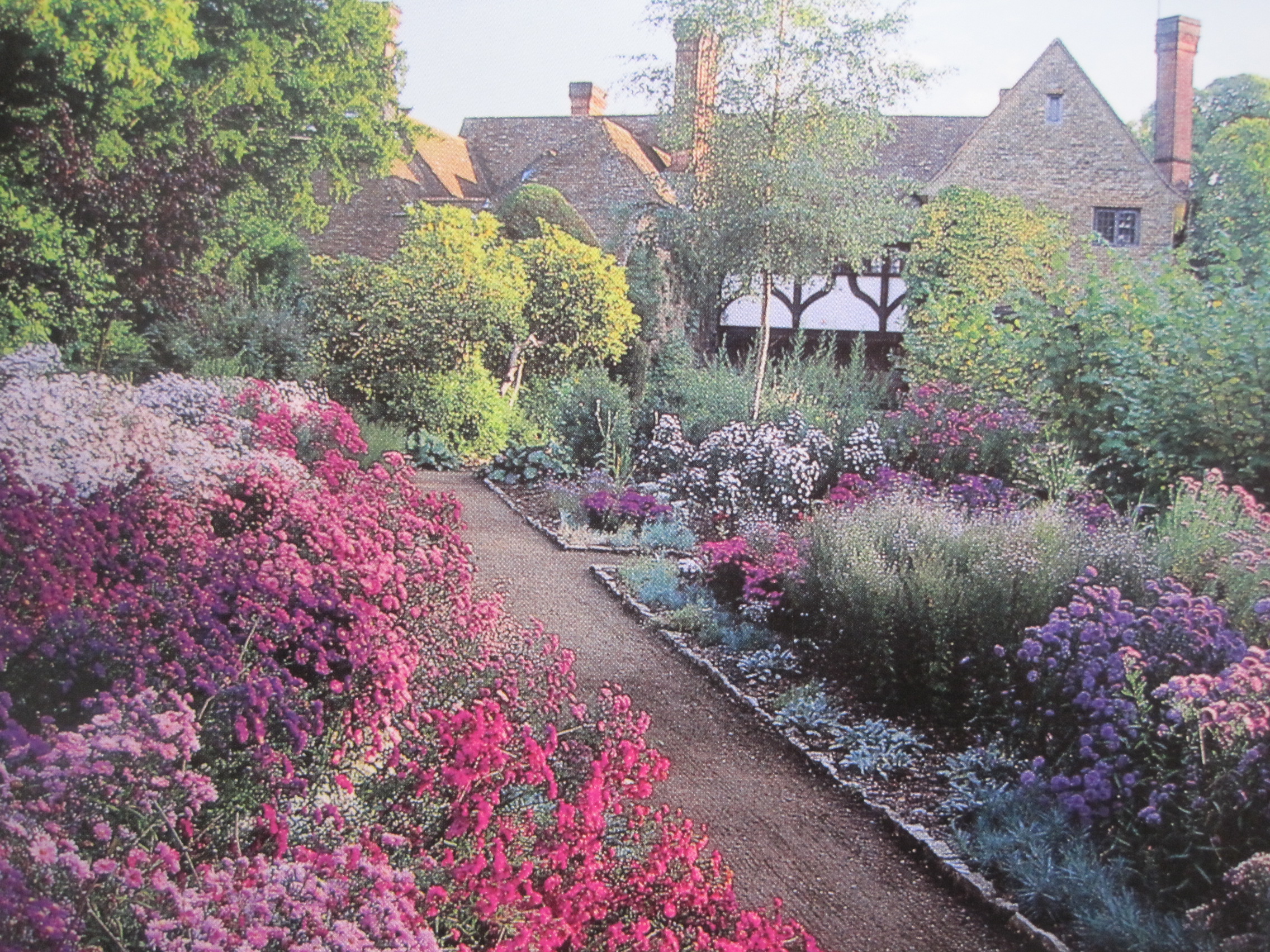 |
| The gardens at Munstead Wood |
Although these flowers were
carefully planted, Jekyll used her extensive knowledge of flowers to ensure
that the flowers had different heights, textures, and leaf colors, which made
the garden seem more natural, and not meticulously planned. These gardens were
supposed to seem wild, which was partially reflective of a growing trend, in
which urban and suburban citizens sought to make a return to rural life. As
industrialization proceeded at a rapid pace, popular sentiment began to shift,
and there was an increasing desire to go “back to the land,” returning to the
slower, simpler country life. Thus, these gardens served as a crucial way to
connect owners to nature, as if the entire garden was nothing more than a field
of wildflowers, swaying gently in the breeze.

Really great post about the gardens of Lutyens and Jekyll. I thoroughly enjoyed reading about how Jekyll wanted gardens that were softer against the hard and rigid architecture of Lutyens, despite how the garden and home were made to flow together. Perhaps creating this enhanced the ability of the garden and the home to resonate with one another. Really good job also with describing the garden so in depth. It was nice tread about the color gradient that Jekyll used so detailed. Good job!
ReplyDelete